

History & Geography
Where the past comes alive.
At Redimere, history is the backbone of our curriculum. Each year, students move through a major era of history, and many of our studies in literature, science, geography, art, music, Bible, and writing are chosen to deepen that shared historical study.
Because the whole school studies the same era of history at the same time, families are able to read, discuss, map, remember, and wonder together. Younger students encounter the great stories of history, while older students examine events, documents, causes, consequences, and ideas with increasing depth.
Stepping into the Story
History & Mapping Program
Our Approach
History at Redimere follows a four-year cycle, allowing students to encounter the major eras of history multiple times throughout their years at Redimere. Each time, the study deepens. Young students listen, narrate, map, and participate; middle school students begin to compare, summarize, and explain; upper school students analyze primary sources, trace ideas, and write with greater precision.
Our history program is designed for both school and home. On home days, families read from their history spine, locate places on a map, record important people and events, and discuss what they are learning together. History also provides much of the content for narration, summary, outlining, writing, and meaningful family conversation.
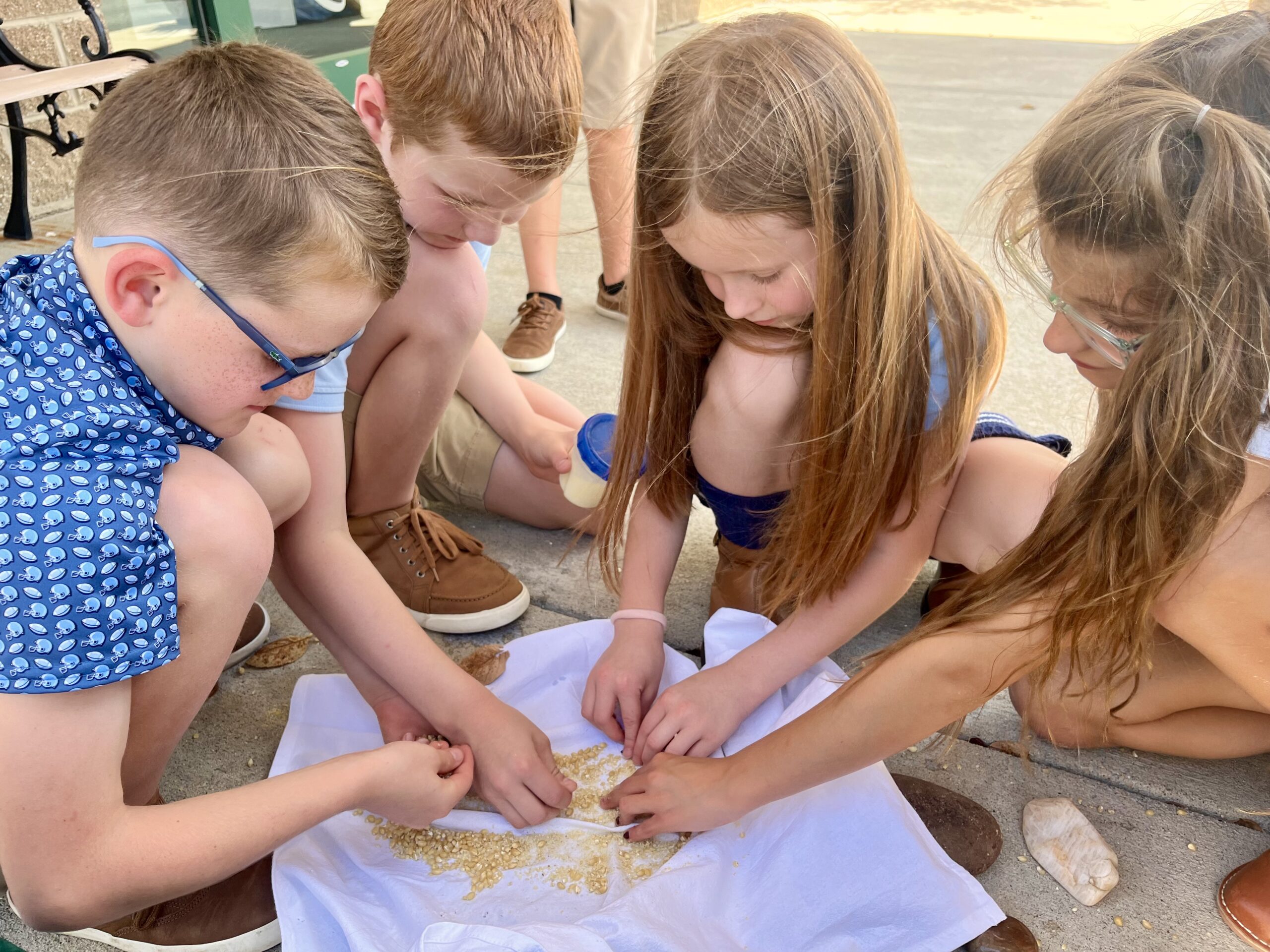
On campus days, students experience history through interactive, hands-on experiences with peers. Students at all grade levels tackle primary sources, enjoy beautiful picture books, debate with one another, and narrate information they’ve gleaned at home.
Geography and mapping are woven throughout the study of history. Students trace, label, memorize, and eventually draw maps from memory so they understand not only what happened, but where it happened and why place matters.
By tying history to stories, mapping, writing, recitation, discussion, art, music, field trips, and hands-on experience, students remember far more than isolated facts. They begin to see history as a living story — one marked by human responsibility, God’s providence, and the unfolding of civilizations across time.